10 Simple Ways to Ease Stress Naturally
Stress has a way of shrinking the day. A small problem feels bigger, your shoulders creep toward your ears, and even simple tasks can start to feel heavy.
You cannot remove every source of pressure from life. Work, family needs, money, health, weather, traffic, and uncertainty all have their moments. But you can build small habits that help your body feel safer and your mind feel steadier.
The ideas below are simple, low-cost, and realistic. They are not a replacement for medical or mental health care, especially if stress feels constant, severe, or tied to anxiety, depression, trauma, or thoughts of self-harm. This article is for general information only. If stress is affecting daily life, speaking with a qualified health professional is a wise next step.

1. Slow your breathing for two minutes
When stress rises, breathing often becomes shallow and quick. That can send the body an extra signal that something is wrong. Slowing the breath gives the nervous system a gentle cue to settle.
Try this:
Breathe in through your nose for four counts.
Pause for one count.
Breathe out slowly for six counts.
Repeat for two minutes.
The long exhale matters. It helps shift the body away from a fight-or-flight state and toward a calmer rhythm.
If counting feels irritating, keep it simpler. Put one hand on your belly and breathe slowly enough that the hand rises and falls. Do not force a deep breath. Aim for easy, steady, quiet breathing.
This works well before a difficult conversation, after a stressful email, while sitting in traffic, or before sleep.
2. Take a short walk outside
A walk does not need to be long to be useful. Even 10 minutes outside can change your mood, loosen tight muscles, and give your thoughts more space.
Fresh air, daylight, and movement work together. Walking also gives stress somewhere to go. Instead of sitting still with tension locked in your jaw, neck, and chest, you let the body move through it.
To make the walk more soothing, try one of these:
Notice five things you can see.
Match your steps to your breathing.
Leave your phone in your pocket.
Choose a quieter street, trail, park, or waterfront path when possible.
In Canadian winters, this may mean bundling up and walking around the block. On icy days, an indoor walk at a community centre, mall, or recreation facility can still help. The goal is not fitness perfection. The goal is to interrupt the stress loop.
3. Drink water and eat something steady
Stress can feel worse when you are dehydrated, over-caffeinated, or running on an empty stomach. Many people mistake a basic body need for an emotional crisis.
Before trying to solve your whole life, check the basics:
Have you had water today?
Have you eaten a real meal or snack?
Have you had more coffee than usual?
Have you been skipping meals because you are busy?
A steady snack can help if you feel shaky or irritable. Think of simple combinations with protein, fibre, or healthy fats, such as yogurt with berries, whole-grain toast with peanut butter, hummus with vegetables, or a boiled egg with fruit.
This is not about strict food rules. It is about giving your body enough fuel so your brain is not trying to handle stress while underfed.

4. Create a simple sleep wind-down
Poor sleep and stress feed each other. Stress makes it harder to sleep, then poor sleep makes stress harder to handle the next day.
A wind-down routine helps your body recognize that the day is ending. Keep it short enough that you will actually do it.
A simple routine could look like this:
Dim the lights 30 minutes before bed.
Put your phone to charge away from the bed.
Wash your face and brush your teeth.
Stretch for three minutes.
Read a few pages of a calm book.
Keep the room cool and dark.
If your mind gets busy at night, keep a notebook nearby. Write down tomorrow’s tasks, worries, or reminders. This tells the brain, “I do not have to hold this right now.”
Try not to turn sleep into another performance goal. Resting quietly still counts. The point is to build a repeatable signal that says, you are allowed to stop for today.
5. Stretch the places where stress hides
Stress often shows up in the body before we name it in the mind. Common spots include the jaw, neck, shoulders, chest, hands, hips, and lower back.
A few minutes of stretching can lower that physical sense of alarm. Move slowly and avoid anything painful.
Try this gentle reset:
Drop your shoulders away from your ears.
Roll your shoulders back five times.
Tilt one ear toward one shoulder, then switch sides.
Open and close your hands.
Press your feet into the floor.
Take one slow breath while relaxing your jaw.
You can do this at home, in the car before going inside, or in the bathroom during a busy day. It may look small, but it creates a useful pause between stress and reaction.
If stretching makes symptoms worse, or if pain is sharp, persistent, or linked to an injury, check with a health professional.
6. Spend a few minutes in nature
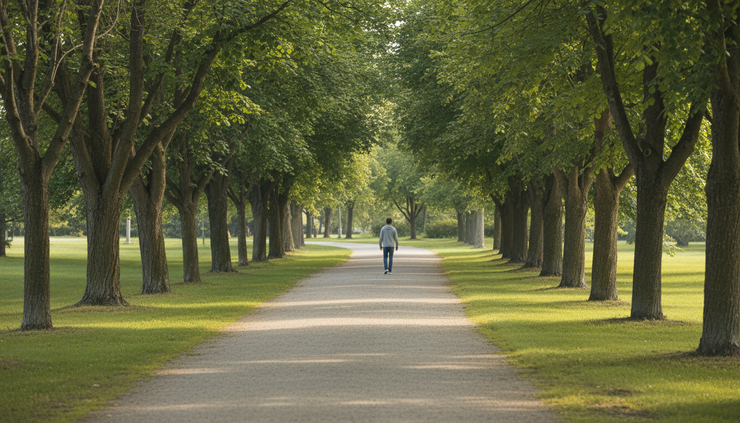
Nature does not need to mean a remote lake or a mountain trail. A tree-lined street, balcony plants, a garden, a local park, or a view of the sky can offer a real break from mental noise.
Research suggests that time in natural settings can support relaxation and well-being. The effect often comes from simple sensory cues: birdsong, wind in leaves, moving water, soil, sunlight, and open space.
Try a five-minute nature pause:
Look at the shape of a tree.
Listen for the farthest sound you can hear.
Feel the temperature of the air.
Watch clouds move.
Touch a leaf, stone, or patch of grass.
This helps bring attention back to the present. Stress often drags the mind into “what if” and “what next.” Nature gives it something quieter to hold.
7. Cut down on stress scrolling
Phones can help with connection, maps, music, and useful information. They can also keep the nervous system on alert. News, arguments, comparison, notifications, and endless short videos can leave the brain overstimulated.
You do not have to delete every app to feel better. Start with one boundary.
For example:
No phone for the first 15 minutes after waking.
No news after dinner.
No phone in bed.
Turn off non-essential notifications.
Move stressful apps off the home screen.
Set one check-in time for messages.
Notice how your body feels after scrolling. Do your shoulders tighten? Do you feel rushed, angry, numb, or behind? That feedback matters.
Replace the habit with something easy. Keep a book beside the couch, play music while making dinner, or step outside for a few breaths. If the replacement is too hard, the phone will win.
8. Write down what is bothering you
Stress gets louder when it stays vague. Writing brings it into focus.
You do not need a beautiful journal or a perfect routine. A scrap of paper works. Open a note and answer three questions:
What is weighing on me?
What part of this can I control?
What is one small next step?
This helps separate real problems from mental clutter. For example, “Everything is a mess” may become “I need to book a car repair, reply to one message, and decide what to make for dinner.”
That feels more manageable.
You can also write a worry list before bed. Put every nagging thought on paper. Then choose one thing to handle tomorrow. Leave the rest on the page.
The goal is not to erase emotion. The goal is to stop carrying every thought in your head at once.
9. Connect with someone safe
Stress often grows in isolation. Talking with someone calm and trustworthy can help you feel less alone, even when they cannot fix the problem.
Choose the right person for the kind of support you need. Some people are good listeners. Others are practical helpers. Some are comforting, while others jump too quickly into advice.
It is okay to be clear. Try saying:
“Can I talk for 10 minutes? I do not need advice yet.”
“I am overwhelmed and could use help sorting the next step.”
“Can we go for a walk? I need a reset.”
“I need a distraction. Tell me something normal.”
Connection does not have to be dramatic. A cup of tea with a neighbour, a phone call with a sibling, or a walk with a friend can help the body settle.
If you feel unsafe, trapped, or at risk of harming yourself, seek immediate support from local emergency services, a crisis line, or a trusted person nearby.

10. Make one small thing easier
Stress often comes from too many open loops. You may not be able to solve the biggest issue today, but you can lower the total load by making one small thing easier.
Pick a task that takes less than 10 minutes:
Put dishes in the dishwasher.
Clear one counter.
Pack tomorrow’s lunch.
Lay out clothes for the morning.
Pay one bill.
Reply to one message.
Take out the recycling.
Set a timer and tidy one room for five minutes.
Small wins matter because they create movement. They remind the brain that not everything is out of control.
Be careful not to turn this into a full cleaning spree or productivity marathon. The point is relief, not punishment. Choose one task, finish it, and stop.
A simple plan for stressful days
When stress is high, it can be hard to remember what helps. Save a short plan somewhere visible, such as a note on your fridge or phone.
Try this version:
When stress feels high | Try this first |
Your heart is racing | Breathe out slowly for two minutes |
Your thoughts are spiralling | Write down the worry and one next step |
Your body feels tense | Stretch your jaw, shoulders, and hands |
You feel stuck indoors | Walk outside for 10 minutes |
You feel alone | Send one honest message to a safe person |
Everything feels too big | Make one small task easier |
You do not need to do all 10 ideas every day. That would become another source of pressure. Pick two or three that fit your life and repeat them often enough that they become familiar.
The best place to start is breathing, walking, and sleep. Those three support almost everything else. From there, add food, connection, writing, nature, and phone boundaries as needed.
Stress relief is usually not one grand fix. It is a set of small signals repeated over time: I am safe enough to slow down. I can take the next step. I do not have to carry this all at once.



Comments